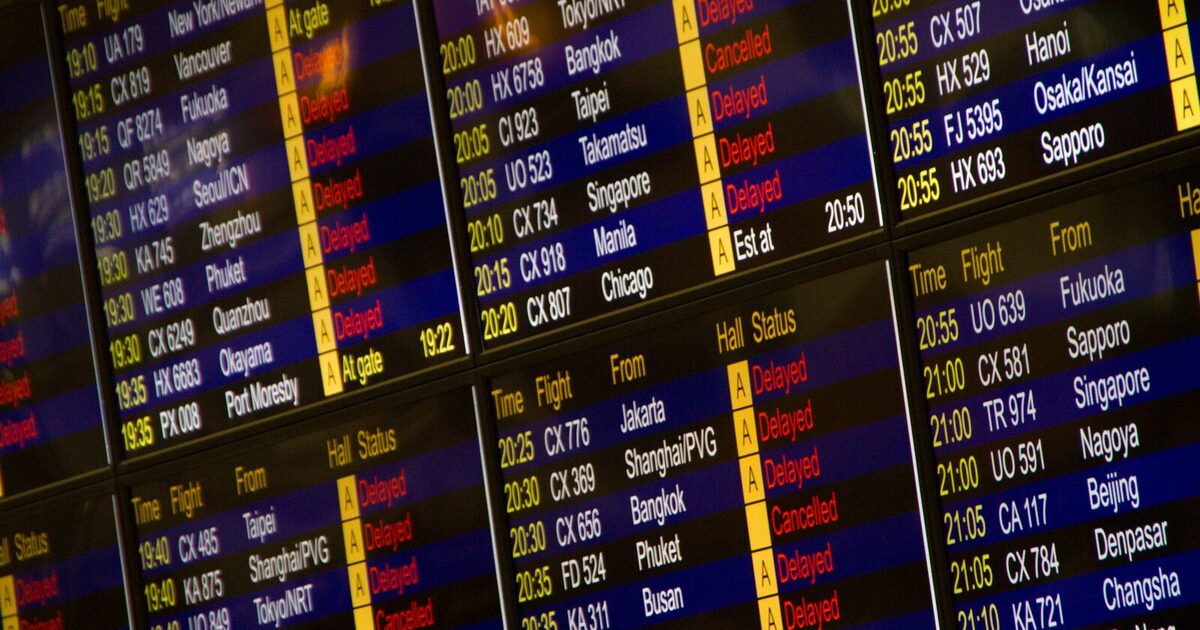
What Happens If My Flight Is Delayed? How Flight Tracking Actually Works
It's the question almost everyone asks before booking airport transport: what if my flight is late? Here's exactly what happens, and why it isn't something you need to manage yourself.
Of all the questions people ask before booking a private transfer, one comes up more than any other: "but what if my flight's delayed?" It's a reasonable worry — arriving into an unfamiliar situation late, tired, and uncertain whether anyone is still going to be there is not a small thing. The short answer is that a delay doesn't put your pickup at risk, because the booking was never tied to a fixed clock time in the first place. Here's how that actually works.
Your booking is tied to a flight number, not a clock time
When you book, the pickup time you're given is calculated from your flight's scheduled landing time — but what's actually recorded against your booking is the flight number itself. That distinction matters, because it means the booking is watching the same real-world event you are: your specific aircraft, on its specific route, on that specific day.
What flight tracking actually means in practice
Commercial flight-tracking data — the same kind of live information you'd see on an arrivals board or a flight-tracking app — is checked against your flight number in the run-up to and during your journey. If your flight is running late, that shows up as a live update to its expected landing time, and your pickup is adjusted to match it automatically. Nobody needs to notice the delay and manually rearrange anything — the system already knows before you've even landed to check your phone.
This works whether the delay is 20 minutes or several hours, and it works the same way for last-minute changes as for delays that are known well in advance, such as an airline pushing a flight back the night before. It also means an early landing is handled the same way — your driver isn't left guessing whether to come early just in case.
Landing time isn't the same as reaching arrivals
There's a second adjustment layered on top of flight tracking: the gap between wheels touching the runway and you actually walking out through customs. That gap varies — by terminal, by how far your gate is from immigration, by how busy passport control is at that time of day — and pickup timing accounts for a realistic version of it rather than assuming you'll appear the moment the flight status changes to "landed." (Our Heathrow terminal guide covers why this gap varies so much by terminal.)
How this connects to free waiting time
This is also exactly why the free waiting time included with every airport pickup is measured from your flight's actual landing time, not the original scheduled time on your booking. A flight that lands two hours late doesn't lose you two hours of your included waiting window — the window starts counting from when your flight actually arrives, because that's the point that's genuinely within your control, or rather, isn't. Every airport pickup includes 60 minutes of free waiting time from that actual landing point, which comfortably covers the ordinary run of immigration queues, baggage reclaim, and the walk out through customs, even on a slower day.
What if the wait runs longer than that?
Occasionally it does — a severely delayed bag, an unusually long queue, a genuinely exceptional day at the airport. If waiting time runs past the included window, any additional time is charged transparently at the rate confirmed at the time of booking, rather than as a surprise added on afterwards. In the much rarer case of a flight being cancelled outright or diverted, the best move is simply to get in touch directly — contact details are on every booking confirmation and on our contact page — so the pickup can be rearranged around your actual new arrival, rather than left to work itself out.
What you don't need to do
Given all of the above, the practical upshot is genuinely simple: you don't need to call ahead when your flight is delayed, you don't need to check whether someone got the memo, and you don't need to build in your own buffer on top of what's already accounted for. The one thing worth doing is keeping your phone reachable on the number given at booking, purely so your driver can reach you directly in the rare situation where something about your arrival is genuinely unusual — not because the system is waiting on you to report a normal delay.
Why this matters more for airport transfers than most other journeys
Flight delays are one of the few disruptions in travel that are both extremely common and almost entirely outside your control. A transfer service that only works if your flight lands on time isn't solving the actual problem most travellers have — it's solving the easy version of it. Tying the pickup to the flight itself, rather than a time printed weeks in advance, is what turns "I hope someone's still there" into something you genuinely don't need to think about.