Private Transfer vs Black Cab vs Ride-Hailing Apps: What's Actually Best for London Airports?
Three genuinely different ways to get to and from a London airport, and which one actually fits your situation — an honest comparison, not a strawman.
London has three genuinely different ways to get between an airport and the city by road, and each one has a real, sensible use case — the honest answer to "which is best" is that it depends what you're optimising for. Here's a straightforward comparison across the things that actually matter for an airport journey specifically: price, availability, luggage, and certainty.
Price predictability
A pre-booked private transfer is priced once, at the point of booking, and that price doesn't move — regardless of traffic on the day, what time you land, or how busy the roads are. A black cab is metered, which is transparent and well regulated, but it does mean the fare on a Friday evening in heavy traffic will genuinely be higher than the same route at 10am on a Tuesday — you don't know the final number until you arrive. Ride-hailing apps show a quote before you book, which is useful, but that quote is dynamic: surge pricing during busy periods, bad weather, or high demand can push the fare up sharply between checking the app and actually confirming the ride, and it can end up considerably higher than a pre-agreed transfer price for the exact same route.
Availability, especially at the times that matter most
This is where the three options diverge the most. A pre-booked transfer is confirmed in advance — a specific driver and vehicle are allocated to your pickup time, so there's nothing to check on the day. A black cab depends on finding one, either at a taxi rank or by hailing one on the street; ranks at the airport terminals are generally reliable, but availability elsewhere in London varies a lot by time and location. Ride-hailing apps are usually convenient, but at exactly the moments airport transport is most needed — very early mornings, very late nights, bad weather, major events — is also when driver numbers can be lowest and wait times or "no cars available" messages most likely to show up. Pre-booking removes this variable entirely, at the cost of needing to know your plans in advance.
Luggage space
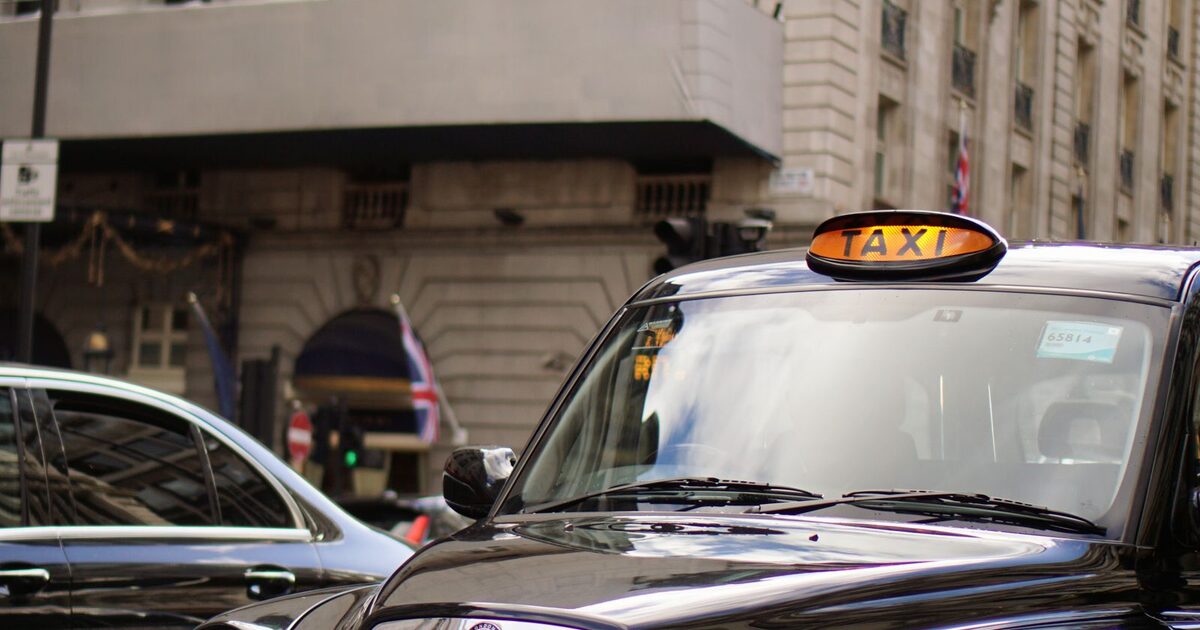
Black cabs are genuinely good on this front — the classic London cab shape has a surprisingly deep boot and extra space by the driver's partition, built with airport-style luggage in mind. Ride-hailing apps are more of a mixed bag: the standard tier is often a regular hatchback or small saloon, which is fine for one passenger with carry-on luggage but can be tight for two or more passengers with full-size suitcases — you may need to specifically request and pay for a larger vehicle tier, and even then it isn't guaranteed until a driver actually accepts. A pre-booked transfer lets you specify passenger and luggage numbers when booking, so the vehicle sent is sized for what you're actually bringing, rather than a guess.
Booking certainty and driver identification
With a pre-booked transfer, you know in advance that a car is coming and roughly what to expect — and, at the airport specifically, your driver is holding a name board in the arrivals hall, so there's no ambiguity about which driver in a crowd is yours. A black cab from a rank is straightforward once you're standing in front of one, but there's no advance confirmation before you arrive. Ride-hailing sits in between: you get a driver name, car, and live map tracking once a driver accepts, which is a real advantage over a plain taxi rank, but that confirmation only happens minutes before pickup, and, as above, isn't guaranteed to happen quickly during busy periods.
Licensing and accountability
All three are legitimate, regulated ways to travel in London, and it's worth being clear about that rather than implying otherwise. Black cabs are TfL-licensed Hackney carriages, with drivers who've passed "The Knowledge." Ride-hailing drivers operate as private hire vehicles, individually licensed by TfL under their platform's own operator licence. Pre-booked transfer services operate the same way — as private hire vehicles under a TfL Private Hire Operator Licence (MisterFare's licence number is 11969) — the difference from ride-hailing isn't the regulatory basis, it's that the vehicle, driver, and price are all fixed at the point of booking rather than assigned on demand.
So which one is actually best?
Genuinely, it depends on the journey. If you're already out in London and need a short, spontaneous hop, hailing a black cab or opening a ride-hailing app is faster and perfectly sensible — pre-booking a transfer for a five-minute cross-town trip would be overkill. Ride-hailing apps are a solid everyday option for casual point-to-point journeys around the city where a few minutes of uncertainty doesn't matter much.
Where a pre-booked private transfer earns its place is specifically the airport journey: a fixed date and time you can't move, luggage that needs a properly sized vehicle, a price you'd rather know before you travel than discover after, and, especially after a long-haul flight, one less decision to make while tired in an unfamiliar arrivals hall. It isn't that the alternatives are bad; it's that airport journeys are exactly the situation where the specific advantages of pre-booking — fixed price, guaranteed availability, a sized-right vehicle, flight-tracked timing — matter the most.